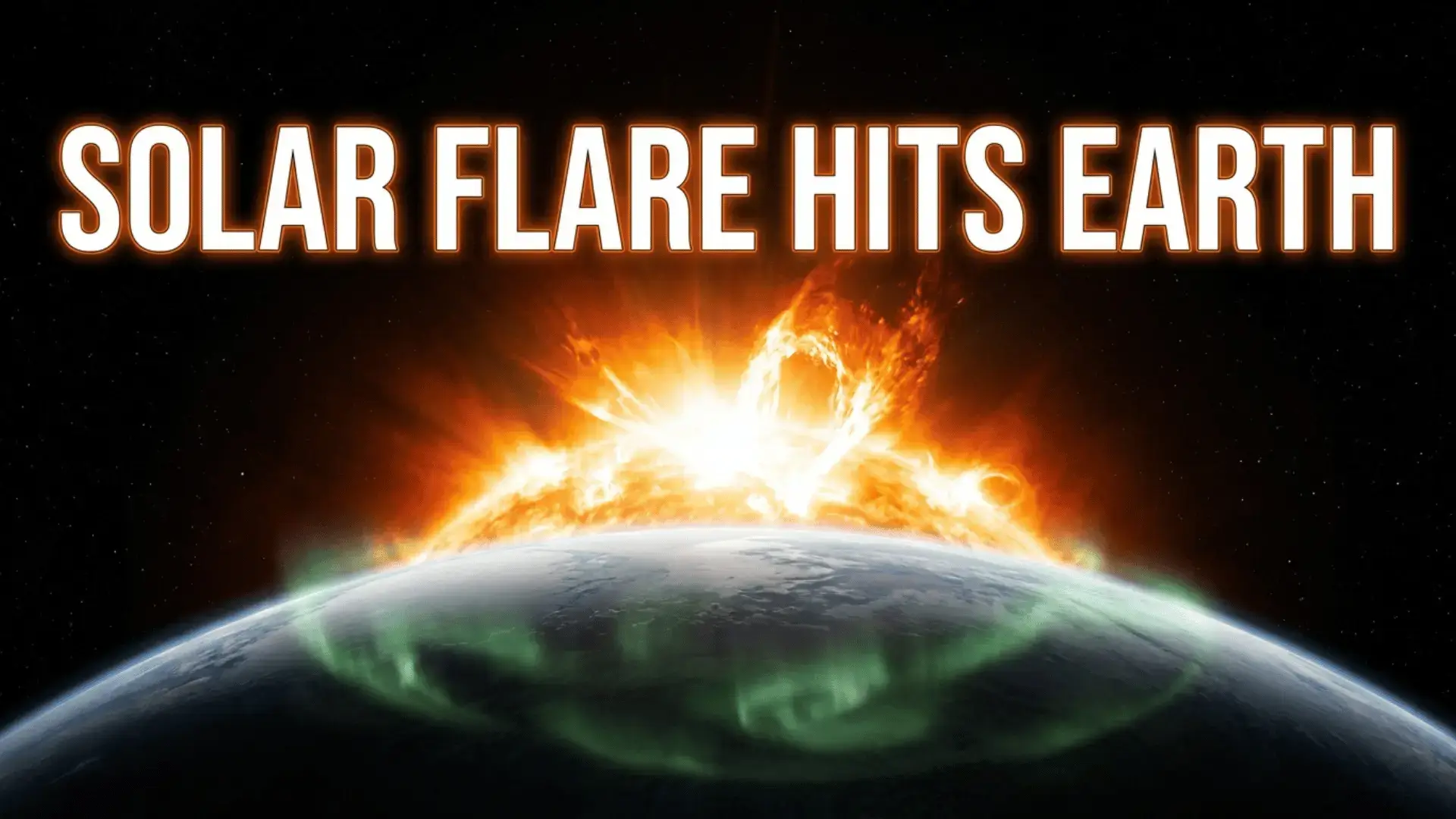
The July 2026 solar flare has space weather forecasters on alert and skywatchers reaching for their cameras. On June 30, 2026, the sun fired off a powerful X1.1 class flare that launched a cloud of charged particles straight at Earth. The result is a geomagnetic storm watch, a shot at seeing the northern lights far from the Arctic, and a small but real chance of glitches in GPS and radio signals.
The short version: A strong X1.1 solar flare erupted on June 30 and sent an Earth-directed cloud of plasma our way. NOAA issued a G2 (moderate) geomagnetic storm watch for July 3. Expect possible aurora across northern US states and minor disruptions to GPS and high-frequency radio. Your phone and gadgets are safe.
What is happening with the July 2026 solar flare
The sun is currently near the peak of its 11 year activity cycle, so big eruptions are more common right now. The July 2026 solar flare came from an active sunspot region and rated X1.1, which puts it in the strongest class of flares. More importantly, it produced a full-halo coronal mass ejection, a massive burst of solar plasma aimed directly at our planet.
When that plasma arrives, it slams into Earth’s magnetic field and creates a geomagnetic storm. NOAA’s Space Weather Prediction Center issued a G2, or moderate, geomagnetic storm watch for July 3, 2026, with weaker unsettled conditions in the days before. G2 is not extreme, but it is strong enough to push the aurora much farther south than usual.
Which states could see the aurora
This is the fun part. A moderate storm can drag the northern lights down into the northern United States. Forecasters said the aurora could be visible across up to 19 states, mostly along the Canadian border, with the best odds in places like Montana, North Dakota, and Minnesota. During stronger bursts, the glow could reach as far as Oregon or New York.
There are two catches. July has long daylight hours, which shortens the dark viewing window. And a bright waning moon can wash out fainter displays. So while the July 2026 solar flare gives you a real chance, conditions have to line up.
| Detail | Info |
|---|---|
| Flare class | X1.1 (strongest category) |
| Flare date | June 30, 2026 |
| Storm watch | G2 moderate, for July 3 |
| Aurora reach | Up to 19 northern US states |
| Best viewing states | Montana, North Dakota, Minnesota |
How the July 2026 solar flare could affect your phone and GPS
Here is the tech angle that matters for everyday users. Solar storms interact with the upper atmosphere, and that can ripple into the technology you rely on:
- GPS accuracy can degrade for a few hours, so navigation apps and location services may drift slightly.
- High-frequency radio used by aviation and emergency services can face brief blackouts.
- Satellites experience extra drag and electrical stress, which operators watch closely.
- Power grids can pick up stray currents during strong storms, though a G2 is unlikely to cause outages.
For a moderate storm like this one, the effects are usually minor and temporary. You might notice your maps app being a touch less precise, but you will not lose service.
Will the solar flare damage your devices?
No, and this is worth stating plainly. A G2 geomagnetic storm will not fry your phone, laptop, or car. The atmosphere absorbs the vast majority of the energy. The real world impacts are limited to systems that depend on precise satellite signals and long-distance radio, and even those are short lived. Your gadgets are safe from the July 2026 solar flare.
How to see the northern lights
If you want to try catching the aurora, a few simple tips go a long way:
- Get away from city lights. Light pollution is the biggest aurora killer.
- Look north. The glow appears low on the northern horizon at these latitudes.
- Go late. The darkest hours around local midnight give the best odds.
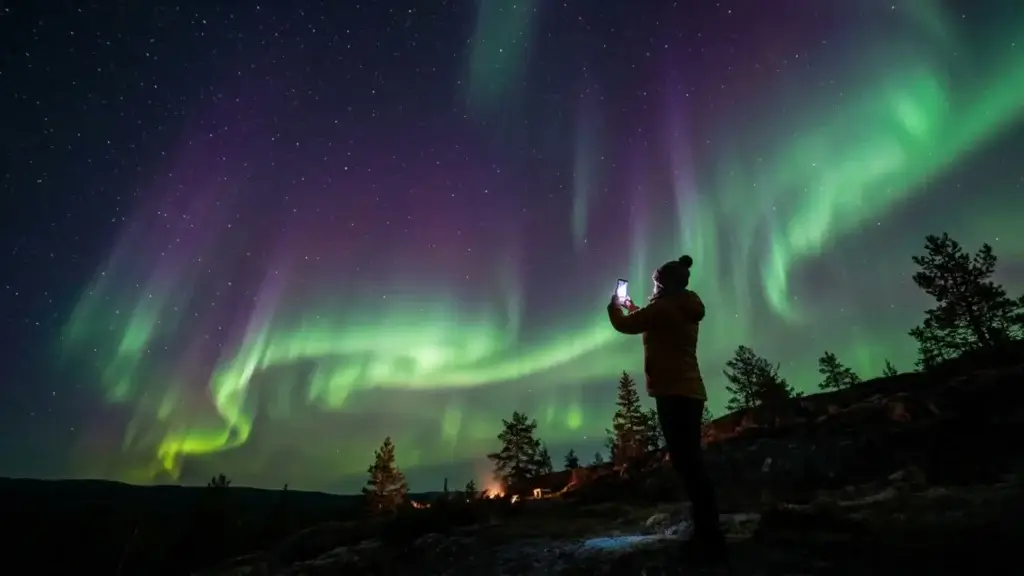
- Use your phone camera. A long-exposure or night mode shot often captures color your eyes cannot see.
- Check live data. Real-time Kp-index trackers tell you when activity spikes.
Frequently asked questions
- How strong is the July 2026 solar flare?
- It was rated X1.1, which is in the strongest class of solar flares. It also launched a full-halo coronal mass ejection aimed at Earth, triggering a G2 geomagnetic storm watch.
- Can the solar flare affect my phone?
- Only mildly. GPS accuracy may drift for a few hours and some radio signals can be disrupted, but your phone will keep working normally and will not be damaged.
- When is the best time to see the aurora?
- The geomagnetic storm watch centers on July 3, 2026. Look during the darkest hours around midnight, away from city lights, facing north.
Final thoughts
The July 2026 solar flare is a reminder that our technology lives under the sun’s weather, not just Earth’s. The likely payoff is a beautiful aurora for millions of people, while the downsides are minor and brief. Keep an eye north over the next couple of nights, and do not worry about your devices.
Want more ways to get the most from your phone? See our roundup of the best free AI apps for Android and our iPhone vs Android comparison.
For live updates and the science, see NOAA’s Space Weather Prediction Center and this X1.1 flare report from The Watchers.