The Dish Wireless bankruptcy is now official, and it marks the end of one of the boldest gambles in US telecom. On June 30, 2026, EchoStar’s Dish DBS and Dish Wireless units filed for Chapter 11 bankruptcy protection in a Houston court. If you are a Boost Mobile customer or you have followed the long saga of Dish trying to become a fourth major carrier, this is the moment that story finally turned a corner.
The short version: Dish Wireless filed a prepackaged Chapter 11 backed by most of its bondholders. It could not repay a 2 billion dollar debt due July 1 because a giant spectrum sale to AT&T has not closed yet. Your Boost Mobile service is not shutting down, but Dish's dream of building a national 5G network is over.
What happened with the Dish Wireless bankruptcy
EchoStar, the parent company behind Dish, put its Dish DBS satellite TV unit and its Dish Wireless mobile unit into Chapter 11 on Tuesday. This was not a chaotic collapse. It was a prepackaged restructuring, meaning the plan was already agreed with about 88 percent of Dish bondholders before the filing. Prepackaged deals move faster and cause less disruption than a messy bankruptcy.
EchoStar co-founder Charlie Ergen, who returned as chairman and CEO to steer the company through its troubles, framed it as a step toward a stronger future. The company says it expects Dish to emerge from the process during the July to September quarter of 2026.
Why Dish Wireless filed for Chapter 11
The trigger was simple and brutal: cash. Dish DBS had 2 billion dollars of senior secured notes due on July 1, 2026, and it did not have the liquidity to pay them. The money was supposed to come from a roughly 23 billion dollar sale of wireless spectrum to AT&T. That deal cleared regulators but, in EchoStar’s words, faced “unforeseen delays” and had not closed in time.
Step back and the bigger picture explains the Dish Wireless bankruptcy. Dish spent years and enormous sums trying to build a nationwide 5G network to challenge Verizon, AT&T, and T-Mobile. It never gained real traction. Last year the company gave up that dream and agreed to sell its spectrum to AT&T and SpaceX in deals worth around 42 billion dollars combined. The bankruptcy is the legal cleanup that lets Dish wind down the wireless network and settle its debts in an orderly way.
Will your phone service be affected?
This is the question most readers actually care about, and the answer is reassuring. EchoStar says its brands, customers, operations, and employees “will not be affected” by the filing. Importantly, Boost Mobile and Gen Mobile are not part of the bankruptcy process at all. They keep operating exactly as before.
So if you are a Boost Mobile customer, your plan, your number, and your service continue as normal. The part that is going away is the behind the scenes Dish Wireless 5G network buildout, not the consumer brands you actually use.
5 things customers must know about the Dish Wireless bankruptcy
- Your service continues. Boost Mobile and Gen Mobile are excluded from the filing and operate normally.
- It is prepackaged. About 88 percent of bondholders already backed the plan, so it should move quickly.
- The cause was a missed 2 billion dollar payment. The delayed AT&T spectrum sale left Dish short on cash.
- The 5G dream is dead. Dish is winding down the national 5G network it once promised to build.
- Dish should emerge by Q3. EchoStar expects to exit Chapter 11 between July and September 2026.
Key facts at a glance
| Detail | Figure |
|---|---|
| Filing date | June 30, 2026 |
| Court | Houston, Southern District of Texas |
| Missed debt | 2 billion dollars due July 1 |
| Spectrum sale to AT&T | Around 23 billion dollars (not yet closed) |
| Bondholder support | About 88 percent |
| Brands still operating | Boost Mobile, Gen Mobile |
What it means for the US wireless market
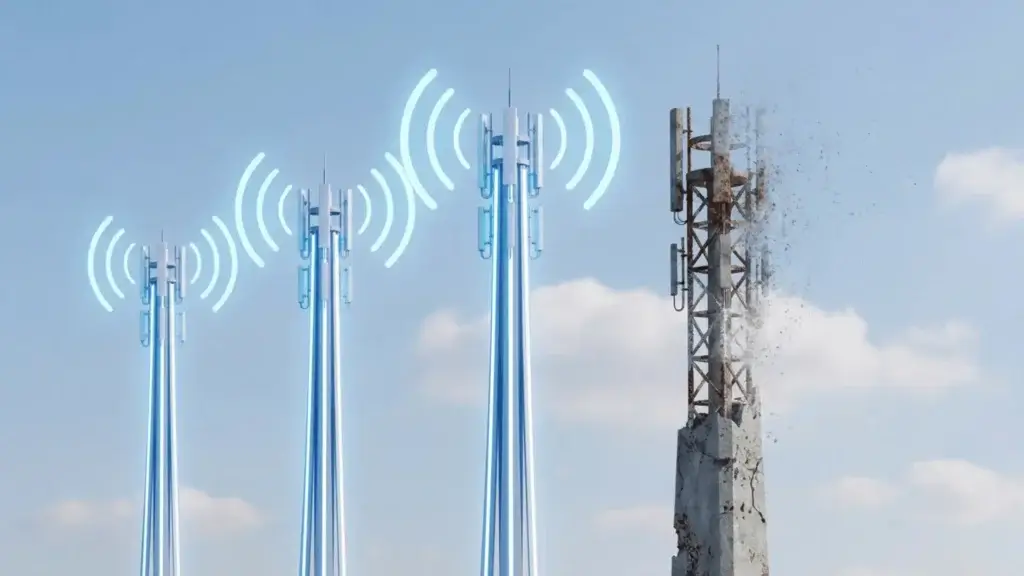
The Dish Wireless bankruptcy effectively confirms that the United States will stay a three carrier country, dominated by Verizon, AT&T, and T-Mobile. Dish was meant to be the disruptive fourth option that kept prices honest. With its spectrum flowing to AT&T and SpaceX, that competitive pressure fades.
For consumers, less competition can mean fewer aggressive price wars over time. On the other hand, AT&T gaining valuable spectrum could improve its network capacity, and SpaceX picking up airwaves hints at a bigger future for satellite to phone connectivity. The pieces of Dish are not vanishing. They are being absorbed by stronger players.
Frequently asked questions
- Is Boost Mobile shutting down because of the Dish Wireless bankruptcy?
- No. Boost Mobile and Gen Mobile are not part of the Chapter 11 filing. They continue to operate normally, so your service is not affected.
- Why did Dish Wireless file for bankruptcy?
- Dish DBS could not repay a 2 billion dollar debt due July 1, 2026, because its roughly 23 billion dollar spectrum sale to AT&T had not closed yet. The Chapter 11 filing lets it restructure that debt.
- Will Dish come back after Chapter 11?
- EchoStar expects Dish to emerge from bankruptcy during the third quarter of 2026. The company will continue, but its national 5G network ambitions are ending.
Final thoughts
The Dish Wireless bankruptcy is less a shock than the final chapter of a story that has been unraveling for years. The consumer impact is small, since Boost Mobile keeps running, but the industry impact is real. America’s best shot at a scrappy fourth carrier is gone, and the giants get a little bigger.
Want to make the most of the carrier you do have? See our iPhone vs Android breakdown and our guide to the best Android phones under 200 dollars.
For the primary sources, see The Verge, Reuters, and EchoStar’s official statement.