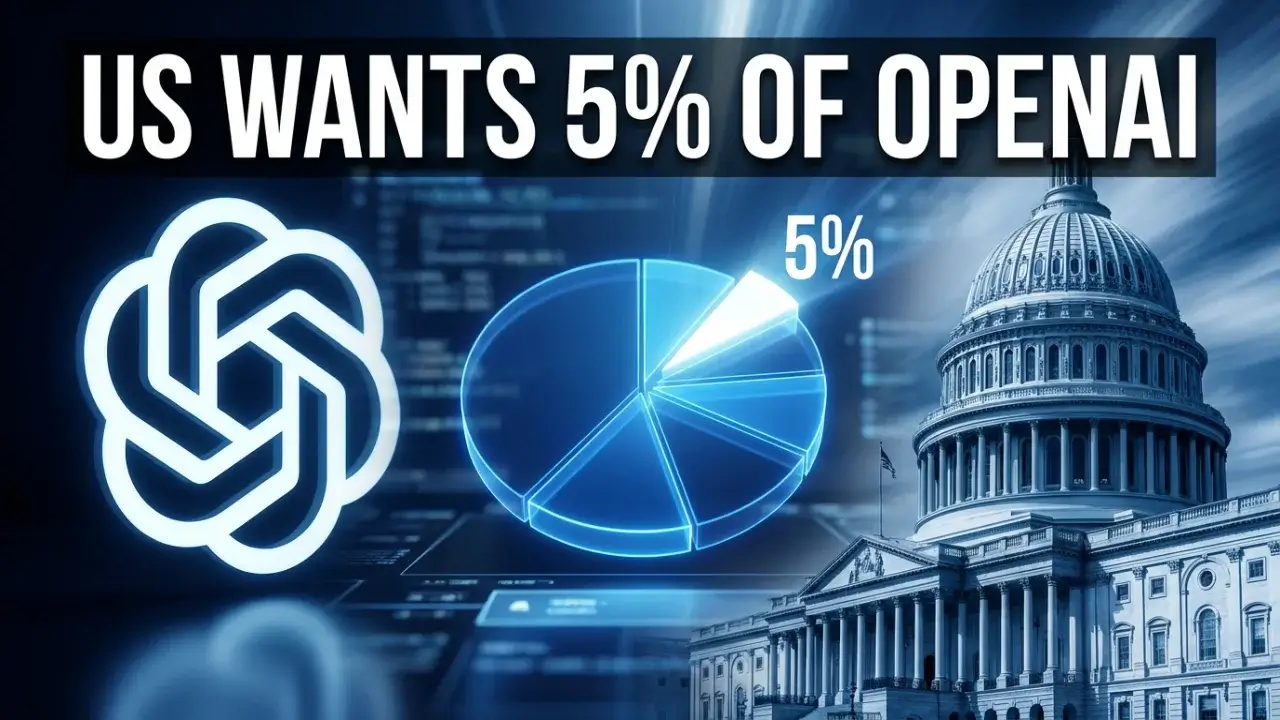
The idea of an OpenAI government stake just went from rumor to real proposal. On July 2, 2026, the Financial Times reported that OpenAI is in early talks to hand the US government a 5% share of the company, a slice worth roughly 42.6 billion dollars. This matters because it could make Washington a part-owner of the maker of ChatGPT, and it affects everyone, from taxpayers who might share in AI profits to rival firms like Google, Meta, and Anthropic that could be asked to do the same.
<aside>
⚡
Key points
- OpenAI proposed giving the US government a 5% stake, per the Financial Times.
- That slice is worth about 42.6 billion dollars at OpenAI’s 852 billion dollar valuation.
- CEO Sam Altman says it is the best way to share AI’s upside with the public.
- Altman reportedly wants Google, Meta, and Anthropic to offer the same.
- Talks are early, and no official terms have been agreed.
</aside>
What happened
According to the Financial Times, OpenAI has begun preliminary discussions about giving the US government a 5% equity stake in the ChatGPT developer. CEO Sam Altman and other executives reportedly pitched the idea to President Donald Trump and White House officials. The plan is not a sale. OpenAI would donate the equity, a structure designed to avoid any direct cash cost to taxpayers.
The move is widely seen as a way to ease political pressure in Washington, where lawmakers on both sides have pushed for the public to benefit from the AI boom. OpenAI confirmed nothing official, and the talks remain at an early stage.
How much is 5% actually worth
The numbers are staggering. Here is a quick breakdown of the proposed OpenAI government stake.
| Detail | Figure |
|---|---|
| Proposed stake | 5% |
| Estimated value | About 42.6 billion dollars |
| OpenAI valuation | 852 billion dollars (March 2026 round) |
| Structure | Donated equity, not a cash sale |
| Status | Early talks, no terms agreed |
That 42.6 billion dollar figure is based on the 852 billion dollar valuation investors gave OpenAI in its March 2026 funding round.
Why OpenAI is doing this
Sam Altman has argued that handing over a stake is the best way to share the upside of AI with the public. The reasoning is part idealism and part strategy. AI threatens jobs across many industries and carries heavy national security weight, which has fueled a political backlash. Giving the government skin in the game could soften that criticism and buy OpenAI goodwill in Washington.
It is also not a brand new idea. Altman first floated a government equity concept in 2025, and OpenAI formalized it in an April 2026 policy paper calling for a “Public Wealth Fund” seeded by AI company equity, so that ordinary Americans could share in AI growth.
Altman wants rivals to join too
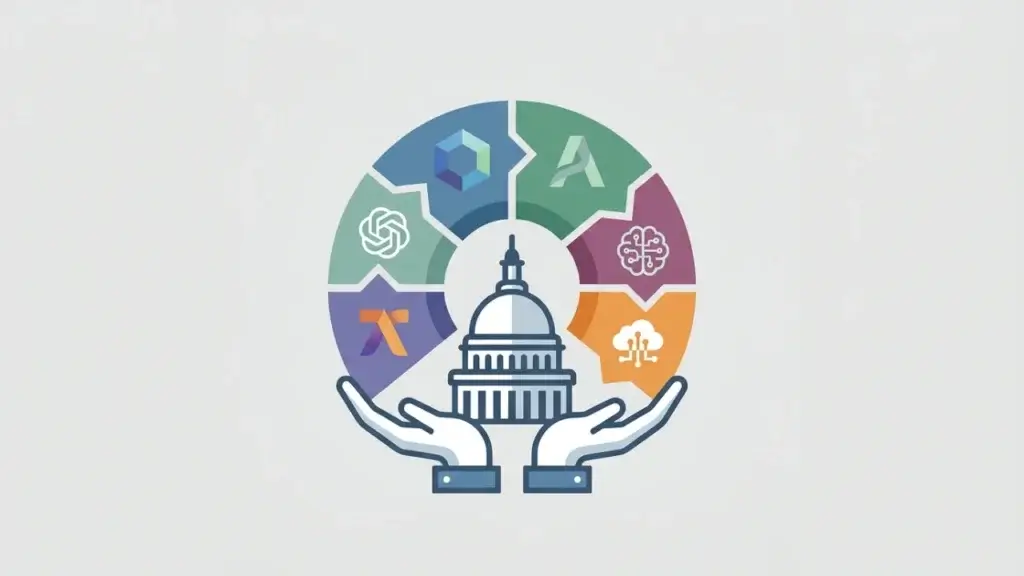
This is the part that could reshape the whole industry. Altman reportedly wants the arrangement to apply across the board, with other leading US AI developers such as Google, Meta, and Anthropic handing over a similar 5% cut. In effect, that would create a government-owned slice of the entire American AI industry. Whether any rival agrees is far from certain.
Where the idea comes from
There is already a template. In August 2025, the US government converted about 11.1 billion dollars of CHIPS Act funding into a 10% non-voting stake in Intel. That deal is now the model supporters point to. The OpenAI plan would work differently because the equity would be donated rather than bought, but the goal is similar: give the public a direct financial interest in strategic technology. The proposal even has bipartisan interest, with figures like Senator Bernie Sanders pushing to redistribute AI earnings.
What it means for you
For now, this is a proposal, not a done deal. But if it goes through, it would be one of the biggest government moves into private tech in modern history. It could set a precedent for how nations share in the wealth AI creates, and it raises real questions about influence: what does it mean when the government both regulates and co-owns the most powerful AI labs? Those debates are only getting started.
FAQ
- Is the OpenAI government stake official?
- No. As of July 2026, this is an early-stage proposal reported by the Financial Times. No terms have been finalized and OpenAI has not confirmed a deal.
- How much would the 5% stake be worth?
- Roughly 42.6 billion dollars, based on OpenAI’s 852 billion dollar valuation from its March 2026 funding round.
- Would taxpayers have to pay for it?
- No. Under the reported plan, OpenAI would donate the equity rather than sell it, so there would be no direct cash outlay from taxpayers.
- Do other AI companies have to join?
- Altman reportedly wants Google, Meta, and Anthropic to offer similar stakes, but none has agreed, and participation is not guaranteed.
Final thoughts
An OpenAI government stake would blur the line between Silicon Valley and Washington like never before. It could hand the public a real share of AI’s rewards, or it could hand the state unusual power over the companies building our future. Either way, this is a story worth watching closely.
Want more on the AI race? Read about Gemini Intelligence, our Claude Sonnet 5 vs Gemini breakdown, and the best free AI apps for Android.
For the primary reporting, see CNBC, Reuters, and The Guardian.